

Bible Study
Our Women’s Ministries need to be more than just social clubs. Instead, we want to point women to the true and living Word of God. A great place to begin is to ensure that women in your church are spending time in the Bible together. Below we share a range of different approaches to studying the Bible that we hope will grow your love and understanding of Scripture. You could use these approaches in a one-to-one discipleship setting, or in a group Bible study.
Swedish Method
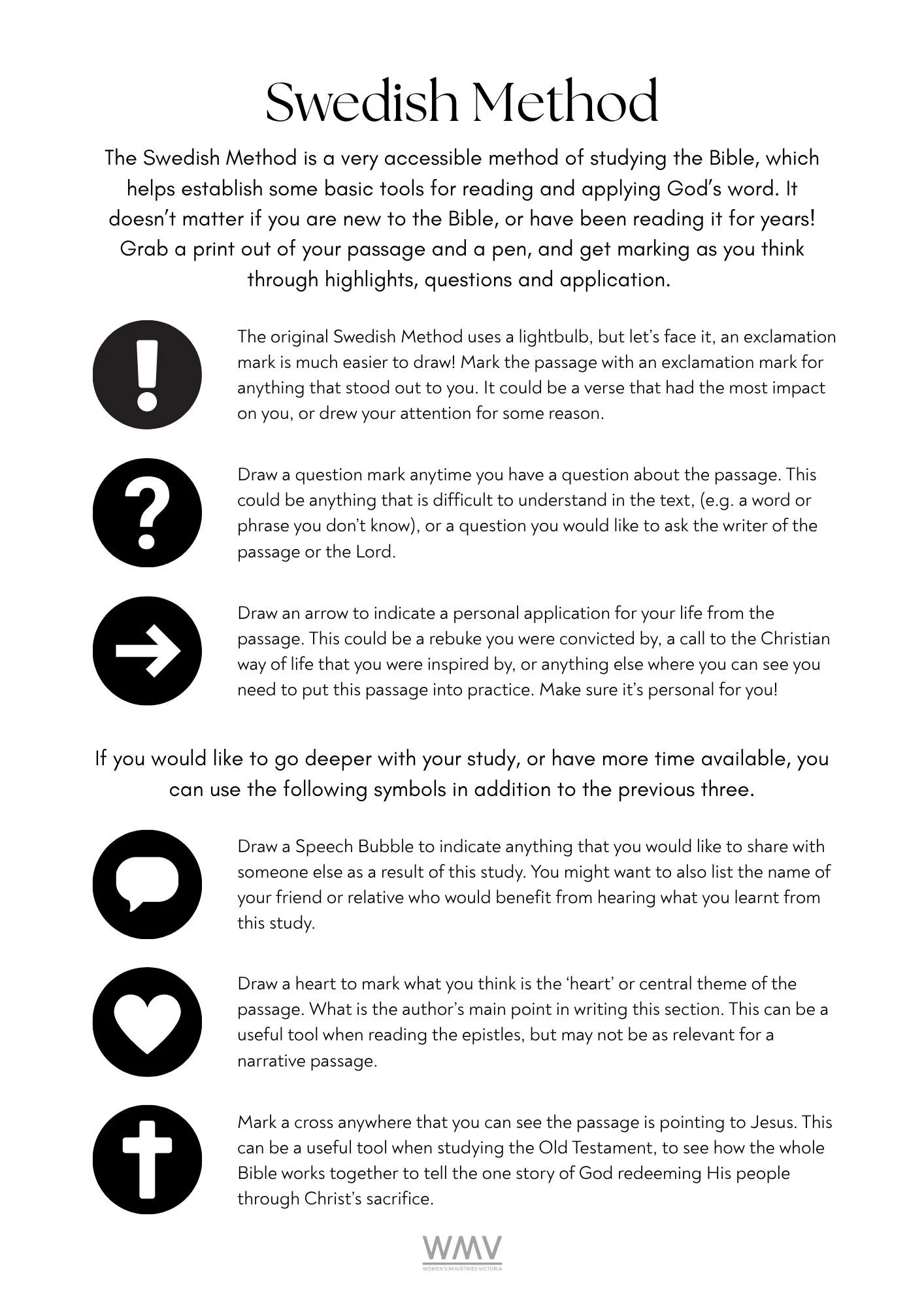
The Swedish Method is a great way to get into studying the Bible without needing a pre-written study to guide you. It is a helpful method if your small group has women of different maturity levels, as everyone contributes. It also helps to eliminate the awkward silence as you wait for someone to answer a question, as there aren’t set questions!
Pros
Easy for all ages and stages to participate
Less prep for leader
Cons
Can end up having shallower conversations without a structure in place to dig deeper
SOAP Method
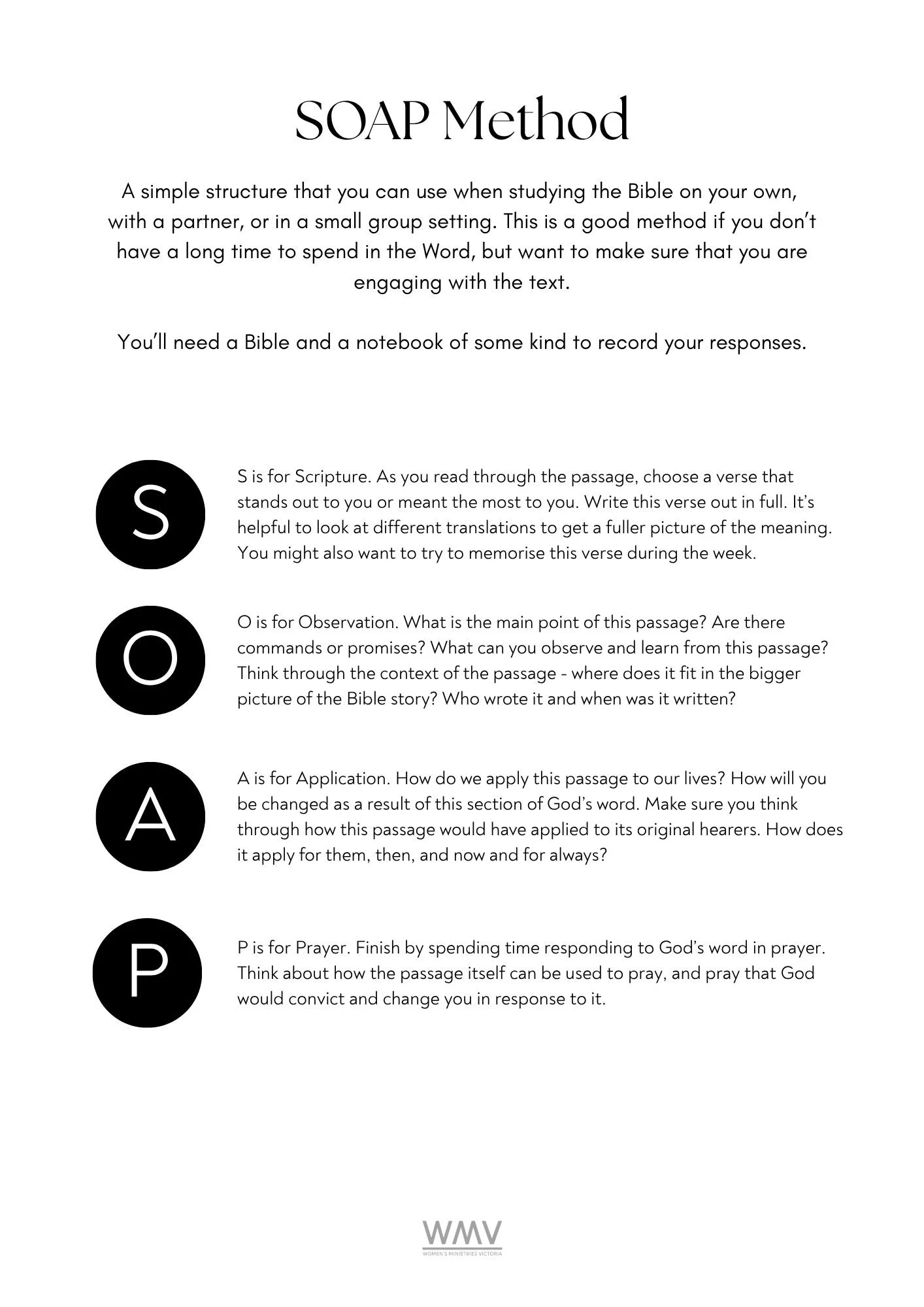
The SOAP method is great for a variety of settings, and can be flexible in how long you take and how deep you go. You can use resources such as commentaries to aid your observation and application time, or just spend time discussing these with your group and learning from each other.
Pros
Adaptable, and can be done in a short time if that’s all your group has time for
Incorporates prayer into the session
Cons
Can become too “me-focused”
Five Looks Method
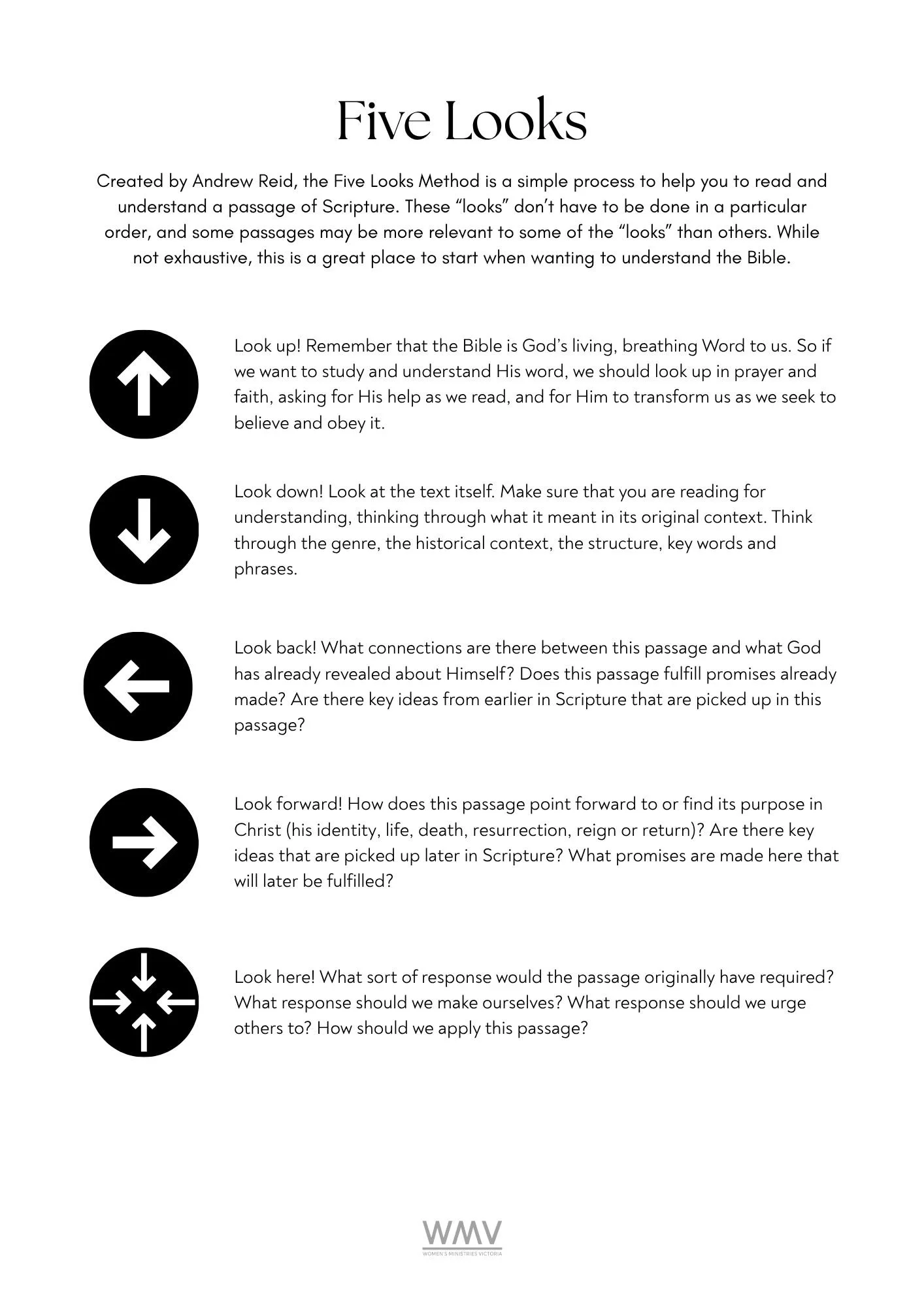
The Five Looks Method is simple, and keeps the study grounded in Scriptural truth. This method can be used on your own, or with others. It does require prior knowledge of Scripture, so it’s not ideal to use with a new believer.
Pros
Ensures the study remains focused first and foremost on the text and truths about God
Great for making connections with the rest of the Bible
Incorporates prayer and personal application
Cons
More work needed from leader to have thought through connections to other passages
Manuscript Discovery Method
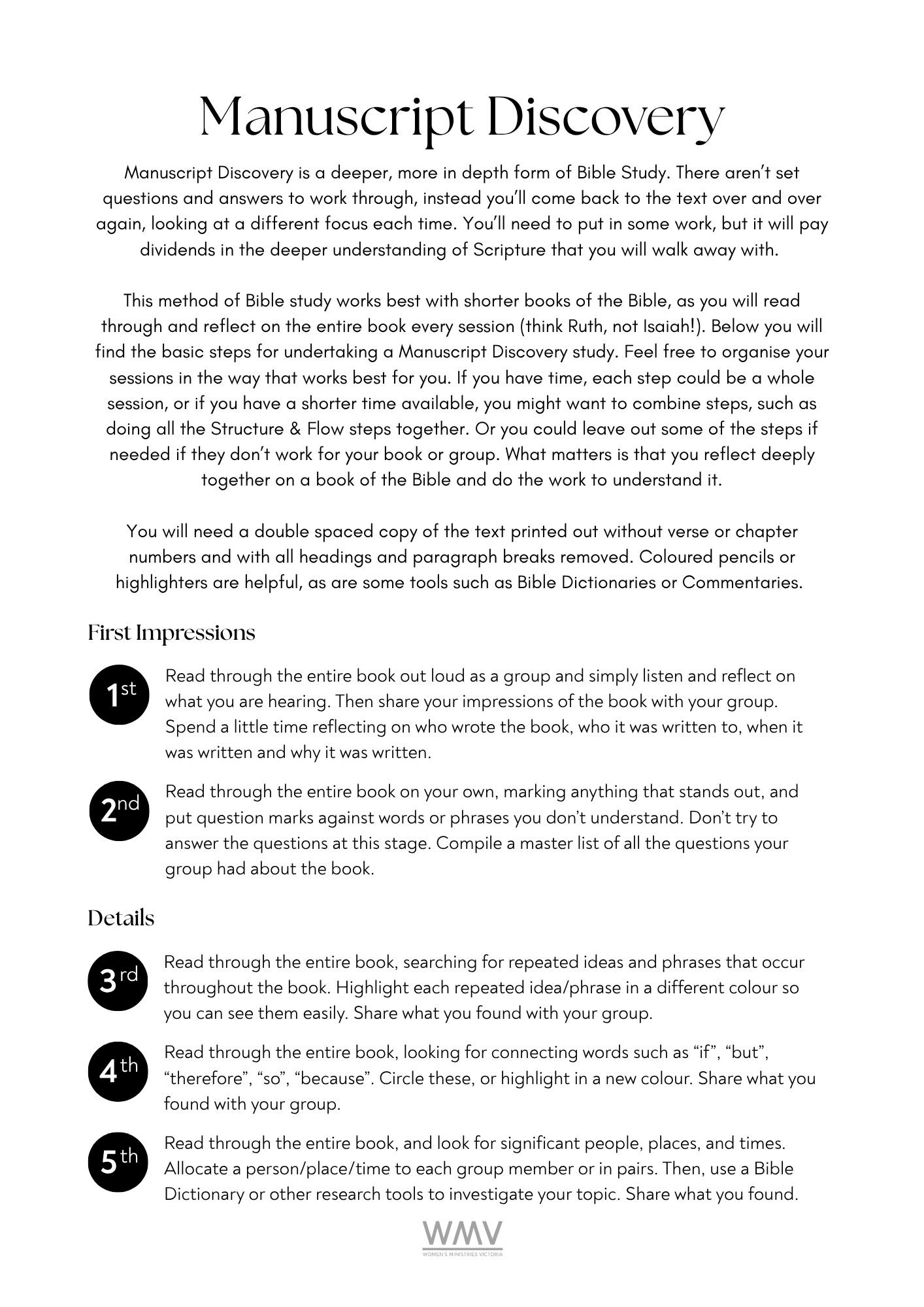
The Manuscript Discovery Method is fantastic for going in-depth in your study of a book of the Bible. It requires active work from participants to identify details and structure of the text, and utilises resources to go deeper in understanding.
Pros
Gives a much deeper understanding of the structure and details of the text than a standard study
Helps build new Biblical literacy tools that women can go on to use in their personal study time
Cons
Some participants may struggle with the different format, particularly only covering application at the end of the series, rather than each session
Because you read through the entire book every session, it’s not suitable for longer books of the Bible